

The History, Heart and Hope of Shady Oaks
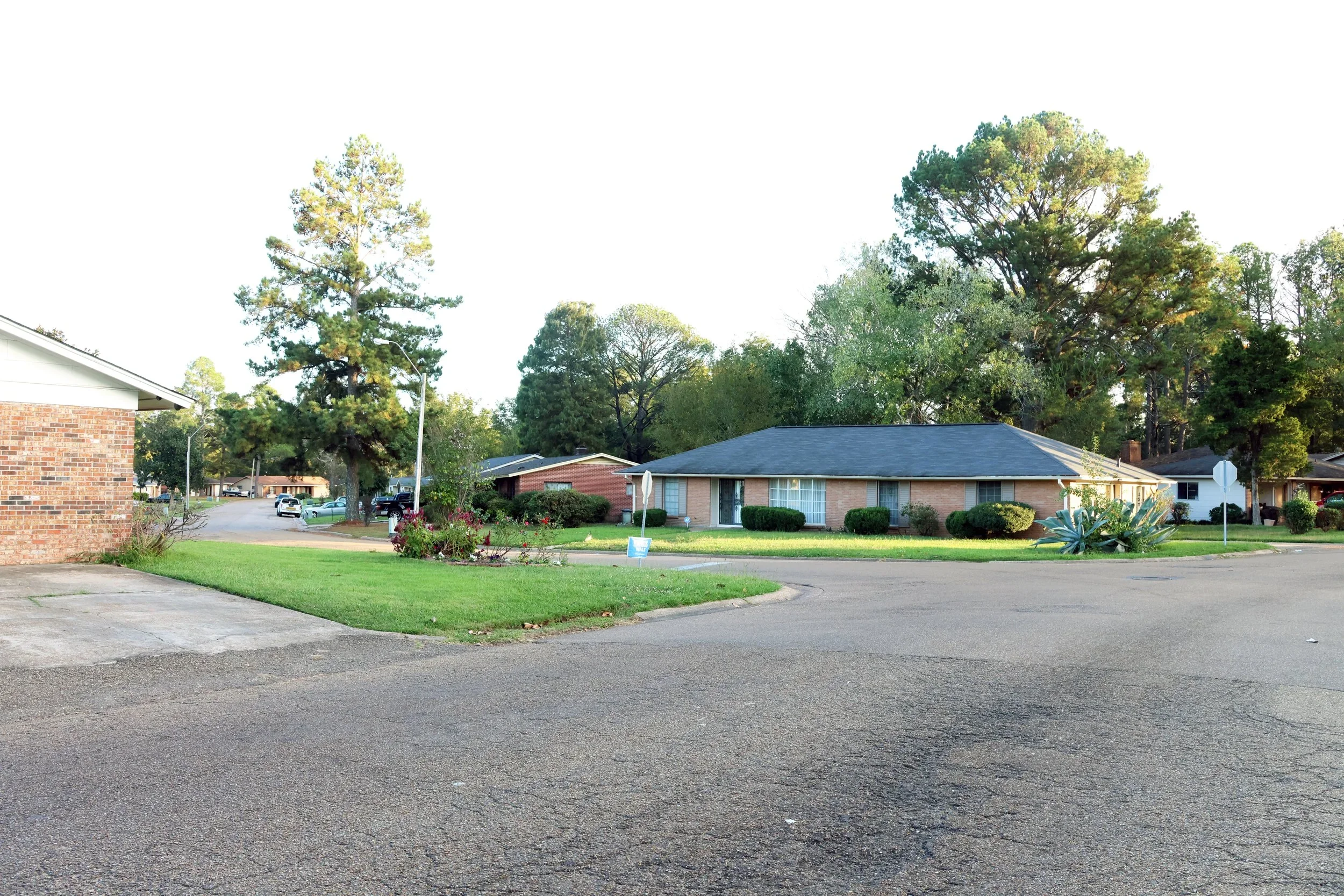
“How can I describe Shady Oaks?” asked longtime resident and neighborhood leader Sirena Wilson. “We’re surrounded by family and faith.”
For many Jackson residents, the name Shady Oaks may not immediately ring a bell.
Mention the Medgar and Myrlie Evers Home, Freedom Corner, the annual Martin Luther King Jr. Day Parade or some of the city’s most influential civil rights leaders, however, and suddenly people realize they have been connected to Shady Oaks all along.
Located in northwest Jackson, Shady Oaks is a neighborhood rich with history, faith, culture and community pride. While the area has experienced its share of challenges over the years, residents say the story of Shady Oaks is not one of decline. It is a story of resilience.
According to neighborhood information maintained by the Jackson Association of Neighborhoods, Shady Oaks is bounded by Utah Street, Parkway Avenue, Albermarle Road, Medgar Evers Boulevard and Sunset Drive. The neighborhood spans portions of Wards 3 and 4 and sits near several other established communities, including Dale Haven and High School Park.
Wilson says those neighborhood lines matter less than the relationships that exist between them.
Neighborhood leaders from Shady Oaks, Dale Haven and High School Park have worked together through a partnership known as “Unity in Action.” What began as a commitment to addressing shared concerns has evolved into a model of collaboration that benefits the entire area. As Wilson noted, “We’ve been doing this for years.”
That spirit of cooperation is visible throughout the area.
Visitors driving through Shady Oaks quickly discover they are surrounded by churches, schools, community centers and historic landmarks. Greater Fairview Baptist Church, St. Peter Missionary Baptist Church, Morning Star Baptist Church and other congregations continue to serve as anchors for neighborhood life. Powell Middle School, formerly Brinkley Junior High School, and the Fannie Lou Hamer Library remain important community institutions.
The neighborhood’s connection to civil rights history is impossible to ignore.
The Medgar and Myrlie Evers Home National Monument sits within the broader community and continues to attract visitors from across the nation. Managed by the National Park Service, the site preserves the legacy of Medgar Evers, the Mississippi NAACP field secretary whose assassination in 1963 helped galvanize the Civil Rights Movement. Wilson notes that visitors frequently come to tour the home and participate in educational programs and special events hosted throughout the year.
Just down the street, a community garden named in honor of Medgar and Myrlie Evers represents another chapter in the neighborhood’s story.
The garden regularly provides fresh produce and serves as a gathering space for residents and visitors alike. Community organizations often host events there, distributing books, gardening supplies and other resources that encourage healthy living and neighborhood engagement.
The neighborhood has also produced notable cultural figures. Wilson recalls the legacy of blues singer McKinley Mitchell, whose family operated a grocery store and record shop along Parkway Avenue. The area is also connected to respected civil rights activists including Ineva May-Pittman and the late Dr. Mamie “Mama Moses” Berts, whose leadership left a lasting mark on Mississippi communities. Shady Oaks was also home to acclaimed poet, novelist and educator Margaret Walker, who lived on the same block as Medgar Evers. Walker, author of the award-winning poetry collection For My People and the landmark novel Jubilee, spent decades teaching at Jackson State University and helped establish what is now the Margaret Walker Center, preserving and advancing the study of African American history and culture.
To understand Shady Oaks today, it is important to understand how the neighborhood began. Much of the area developed during the years following World War II, when returning veterans and their families were looking to put down roots and purchase homes. Residents often refer to it as a “GI neighborhood” because many of the families who settled there included veterans, educators, clergy members, public servants and working-class professionals. At a time when segregation and discriminatory housing practices limited opportunities for Black homeownership, neighborhoods like Shady Oaks provided a pathway to stability, investment and community building.
Originally developed as the Elraine Subdivision between 1955 and 1957. The subdivision was created by African American developer Winston J. Thompson and builder Leroy Burnett and is recognized as one of Mississippi’s earliest post-World War II subdivisions developed specifically for middle-class Black families. The neighborhood offered newly constructed homes and modern amenities at a time when many African American families faced significant barriers to housing opportunities elsewhere. Today, the district remains one of the most significant examples of mid-century African American residential development in the state.
That history continues to shape the community. The same streets that once welcomed veterans, educators, business owners and civil rights leaders are now home to residents working to strengthen the neighborhood for future generations. Through neighborhood associations, churches, community gardens and historic preservation efforts, Shady Oaks continues a tradition of civic engagement that stretches back decades. The neighborhood’s story is not only about its past. It is also about the residents who continue to invest their time, talent and energy into building a stronger future for Jackson.
Like many neighborhoods across Jackson, Shady Oaks continues to advocate for infrastructure improvements. Residents point to road conditions, traffic concerns and railroad crossings as issues that deserve attention. Yet conversations with community leaders rarely stay focused on problems for long.
Instead, they return to possibility.
They return to the children who grew up together attending G.S. Smith Elementary School. They return to the churches that continue to serve families. They return to neighborhood meetings held every month where residents gather not simply to discuss challenges, but to shape solutions.
Perhaps that is the real story of Shady Oaks.
It is a neighborhood that understands its history but refuses to be defined solely by it. It is a community where civil rights history lives alongside community gardens. Where longtime neighbors still know one another by name. Where faith, service and collaboration remain powerful forces.
For Jackson residents who have never visited, Wilson offers an invitation without ever saying the words directly.
Come see it for yourself.
Tour the historic sites. Attend a church service. Visit the community garden. Meet the people who call this neighborhood home. Spend an afternoon learning the stories behind the streets.
You may arrive expecting to discover a neighborhood.
You will likely leave with a deeper understanding of Jackson itself because Shady Oaks is a place where people continue to invest in one another, preserve history, plant seeds for the next generation and believe that better days are ahead.
In many ways, Shady Oaks is doing what Jackson has always done at its best: honoring its past while building its future.