

Operation Good’s Neighborhood-First Philosophy
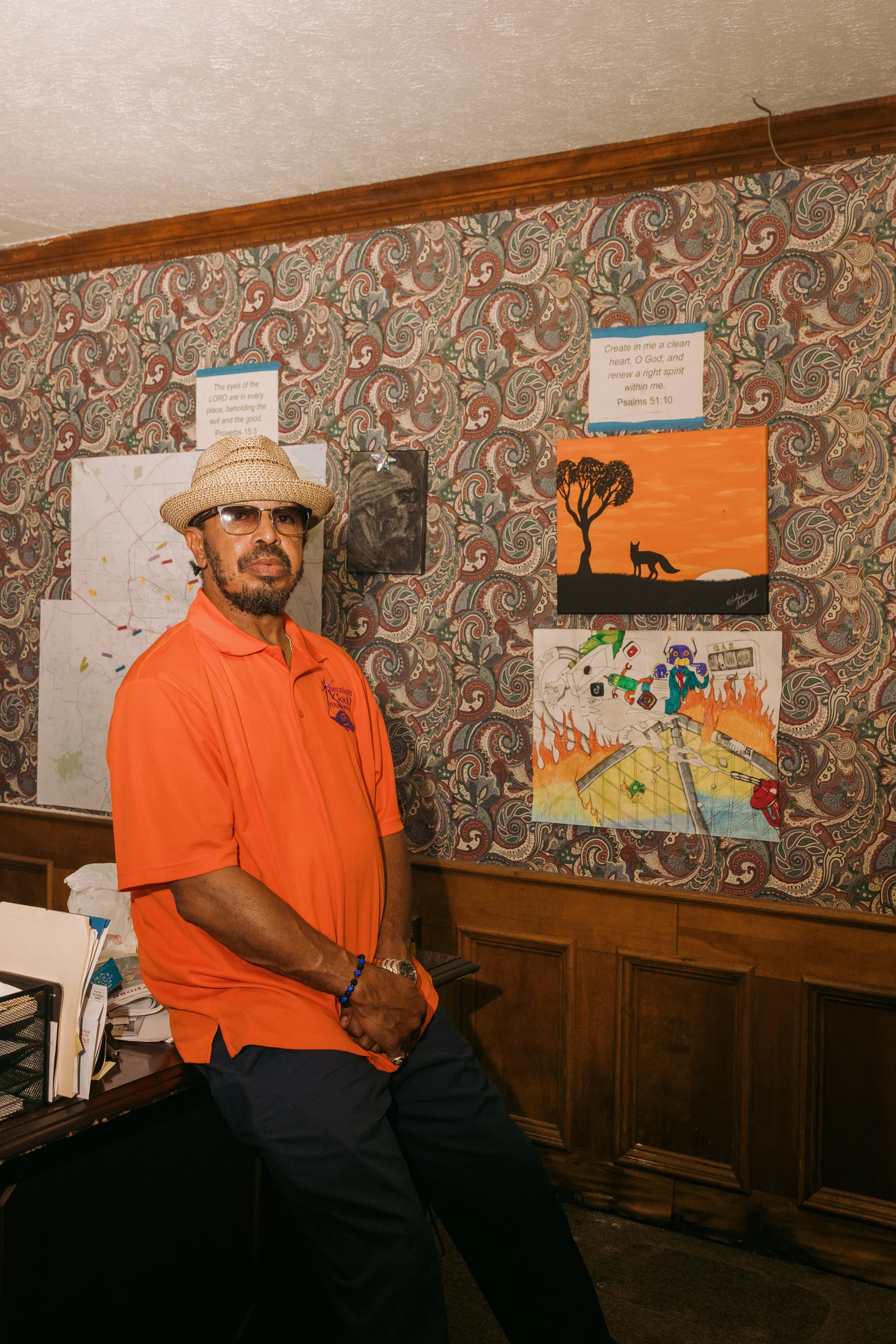
Image Credit: Imani Khayyam
The city of Jackson has no shortage of conversations about crime.
Community meetings are held. Panels are assembled. Reports are written. Strategies are debated.
Yet while much of the conversation happens around conference tables and podiums, another kind of work is taking place everyday and every night on the streets.
That is where Operation Good has quietly built its neighborhood-first philosophy.
For Operation Good, the conversation usually happens in the middle of the street.
As founder of Operation Good, Geno Womack has spent more than a decade building a simple but often overlooked philosophy: neighborhoods are transformed from the inside out. Not from the top down.
Headquartered in Ward 6, Operation Good focuses much of its work in south Jackson, particularly neighborhoods that have experienced persistent violence and decades of disinvestment. Today, the organization works throughout Jackson and increasingly in surrounding communities, including Canton, where conflicts often spill across city boundaries.
“We don’t just work one neighborhood,” Womack said. “Once we help people here, they still come into contact with people in other parts of the city. If those communities don’t have the same support, the problems don’t stay in one place.”
That neighborhood-first philosophy begins with a premise that challenges conventional thinking.
The men and women many communities are quickest to dismiss may be among those best equipped to prevent the next act of violence.
Operation Good was originally created to help formerly incarcerated individuals successfully return home and avoid returning to prison. Through that work, Womack discovered something larger. People with lived experience often possess relationships, credibility and trust that cannot be taught in a classroom or created by a government program. They know the streets because they once lived on them. They know the warning signs because they once ignored them themselves.
Today, many of those same individuals serve as mentors, violence interrupters and trusted voices in neighborhoods where outsiders often struggle to gain credibility.
“What they’re really doing is standing between guns every day so somebody else’s child gets another chance,” Womack said.
Womack’s own journey reflects the philosophy he now teaches.
Raised in poverty, he became the first in his family to attend college, eventually earning both a bachelor’s degree in biology and an MBA. He later served in the U.S. Army before returning home with a new mission: apply the same discipline and leadership to Jackson’s neighborhoods that he had witnessed elsewhere.
His message is neither complicated nor political.
Change starts with yourself.
Then your family.
Then your block.
Then your neighborhood.
Only then does it spread across a city.
That ripple effect has defined Operation Good since its earliest days.
Long before youth violence dominated headlines, volunteers were mentoring young people they saw carrying assault weapons through neighborhood parks. During the COVID-19 pandemic, they distributed food throughout Jackson while continuing neighborhood patrols intended to prevent violence before it occurred.
Just as importantly, they began changing the physical environment.
Volunteers cleaned vacant lots, cut overgrown grass, cleared abandoned properties and removed hazards that children encountered every day.
“If we change the environment, we can begin changing the mindset,” Womack said.
Neighborhood revitalization is often measured by new buildings, new businesses or new investment.
Operation Good offers a different measurement.
How many lives can be redirected before another crime occurs?
Jackson’s future will require many solutions. Meaningful change rarely begins with a headline.
For more than a decade, Operation Good has built its work around a simple belief: the people closest to the problem are often closest to the solution.
Long before the term violence interrupter became part of the national conversation, Operation Good was putting that philosophy into practice on Jackson’s streets. Today, others may use the title, but Womack’s team continues to define it not by what they say, but by where they stand, often unseen, often unsupported and often at great personal risk.
Between conflict and calm.
Between retaliation and restraint.
Between one more tragedy and one more chance.
Perhaps Jackson’s greatest untapped resource isn’t another initiative, another report or another community meeting. It may be tapping in, supporting, and investing in the men and women who have walked the streets, survived them and returned to protect them.
Join JAN
Interested in strengthening your neighborhood? Join the Jackson Association of Neighborhoods and become part of a citywide network of residents, neighborhood associations, businesses and community partners working together to build stronger communities. JAN members receive access to leadership training, resources and toolkits, funding opportunities, networking, collaborative programs and other programs.