

Black, White, and Many Nations How Lorena Quiroz Is Helping Jackson Build Community Across Cultures
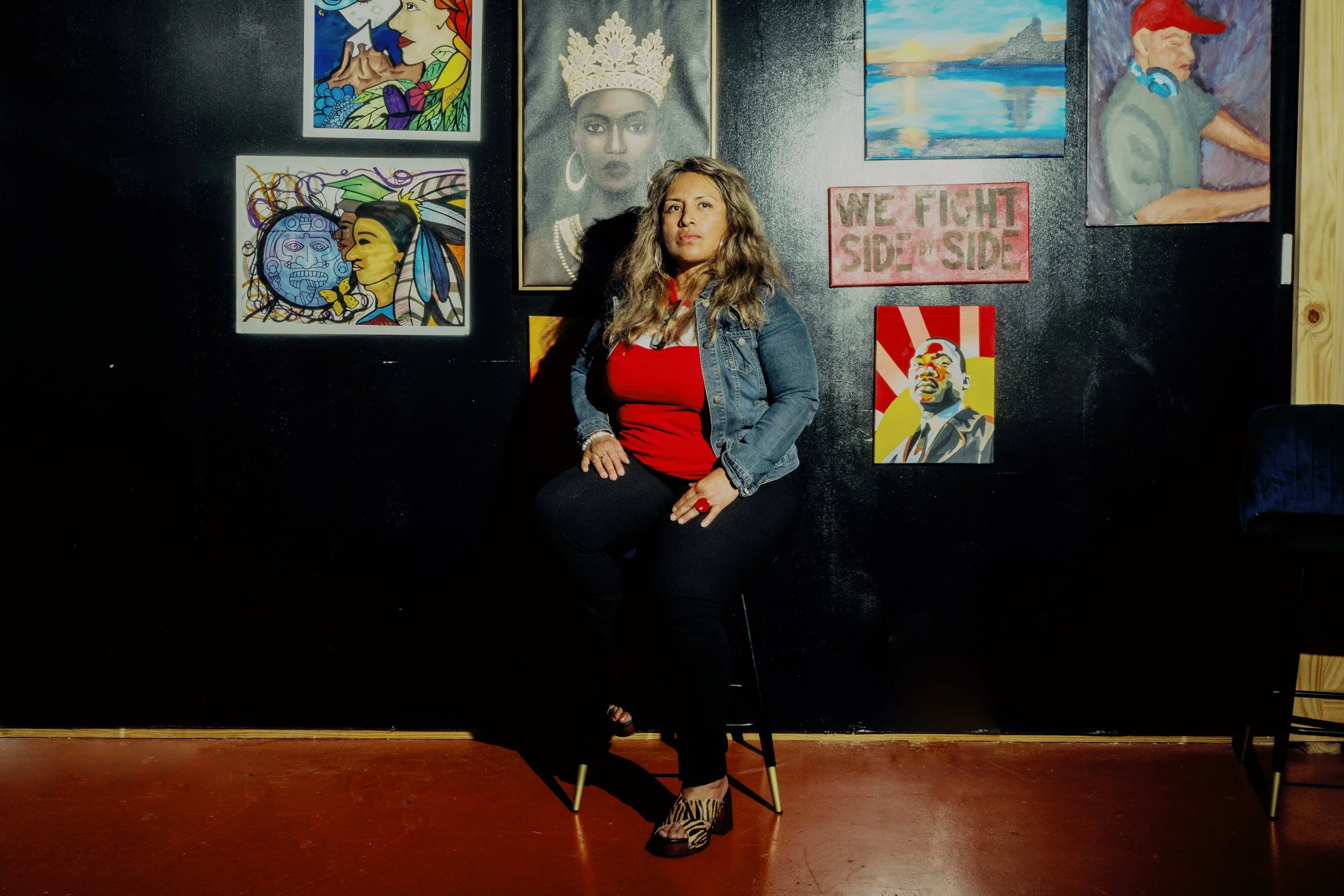
Image Credit: Imani Khayyam
When people think about Jackson’s history, they often think in terms of Black and white. While those stories remain essential to understanding Mississippi, Lorena Quiroz, executive director of the Immigrant Alliance for Justice and Equity (IAJE), understands that they are not the only stories shaping the city of Jackson today.
Jackson’s story has never belonged to just one people or culture. It is a city shaped by generations of Black and white Mississippians, by the enduring presence of the Mississippi Band of Choctaw Indians, and by immigrants and newcomers from around the world. Across the city, families from Europe, Latin America, Africa, Asia, the Caribbean and other parts of the United States are revitalizing neighborhoods, opening businesses, raising families and contributing to the evolving identity of Mississippi’s capital city.
Born in Guayaquil, Ecuador, Quiroz immigrated to the United States with her family as a young child. She spent much of her upbringing in New York City, where she lived among one of the most diverse populations in the nation before eventually finding her way to Mississippi through marriage.
What began as a move to the Delta in 1998 became a lifelong commitment to Mississippi and its people.
Today, Quiroz leads IAJE, a Jackson-based organization dedicated to building what she describes as a “multiracial, multilingual, multicultural democratic space” where immigrants and longtime residents can work together to strengthen communities.
For Quiroz, the work is not simply about immigration policy. It is about belonging. “We never say we’re someone’s voice,” she said. “People already have a voice. They just need the tools, the platform and the opportunity to be heard.” This philosophy has guided IAJE’s work over the past several years.
Founded in the aftermath of the 2019 immigration raids that affected hundreds of Mississippi families, the organization has evolved into a statewide network focused on leadership development, public health education, civic engagement and community organizing. Through programs such as its Promotora initiative, IAJE trains trusted community leaders to educate their neighbors about health, resources and advocacy while helping residents build stronger connections within their communities. But, the impact extends beyond immigrant communities.
Quiroz believes Jackson’s future depends on creating spaces where people from different backgrounds can learn from one another rather than retreat into separate worlds, and that vision is already alive throughout the city.
South Jackson, for example, has long been home to immigrant families from Honduras and Mexico, many of whom have purchased and restored homes in established neighborhoods. Jackson is also home to growing African, Filipino and Vietnamese communities, along with international students attending local colleges and universities. These residents contribute not only economically but culturally, bringing languages, traditions, food and perspectives that enrich the city as a whole.
Too often, Quiroz says, immigrants are viewed through a narrow lens that overlooks their contributions and humanity.
Quiroz encouraged a more thoughtful approach to how communities discuss immigration. She explained that IAJE does not use terms such as “legal” or “illegal” to describe people, noting that immigration statutes exist on a broad spectrum of visas, residency categories and federal processes. She emphasized that pathways to citizenship can take years and often become more complicated as laws and regulations change. For her, the conversation is less about labels and more about ensuring that people understand their rights, responsibilities and options while being treated with dignity and respect.
“We are asked to assimilate,” she said. “Our organization pushes back on assimilation.” Instead, IAJE encourages people to maintain their cultural identities while learning how to navigate civic systems and participate fully in community life.
That commitment is perhaps most visible through the Progressive Youth of Mississippi Fellowship, a program that introduces young people to the many cultures that call Mississippi home. Participants learn about community organizing, visit significant cultural sites and engage in conversations about history, identity and civic engagement.
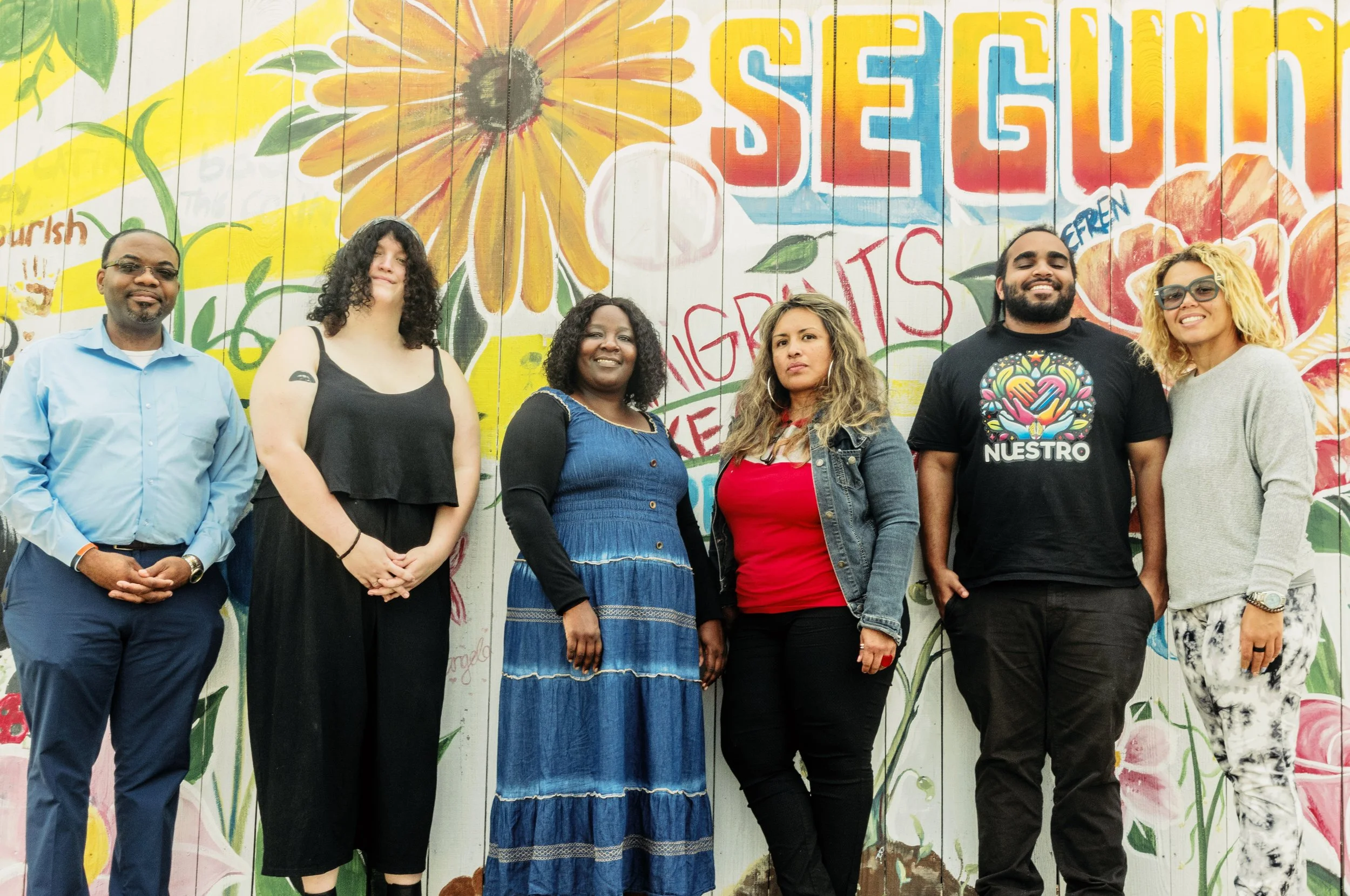
Image Credit: Imani Khayyam
Recent cohorts have included Black, Latino, Indigenous, Asian and white participants working together on projects designed to build understanding across communities.
For Quiroz, these experiences represent some of the most important work being done in Mississippi today.
When she reflected on a recent gathering of young fellowship participants from different racial and cultural backgrounds, Quiroz said, “I asked them if they felt safe,” she said. “They all said yes.”
To her, that moment represented something larger than any grant, award or program milestone. It represented the present and the future of Mississippi, where a generation of young people sitting together, learning from one another where differences are not feared but embraced.
After more than two decades in Mississippi, Quiroz has dedicated her career to helping neighbors understand one another across lines of language, culture and experience.
Perhaps that is the real legacy of Lorena Quiroz’s work. She is not simply building bridges between communities. She is helping Jackson imagine what becomes possible when people choose to cross them.
Interested in strengthening your neighborhood? Join the Jackson Association of Neighborhoods and become part of a citywide network of residents, neighborhood associations, businesses and community partners working together to build stronger communities. JAN members receive access to leadership training, resources and toolkits, funding opportunities, networking, collaborative programs and other programs.