

Foot Print Farms Is Planting a Different Vision for Jackson
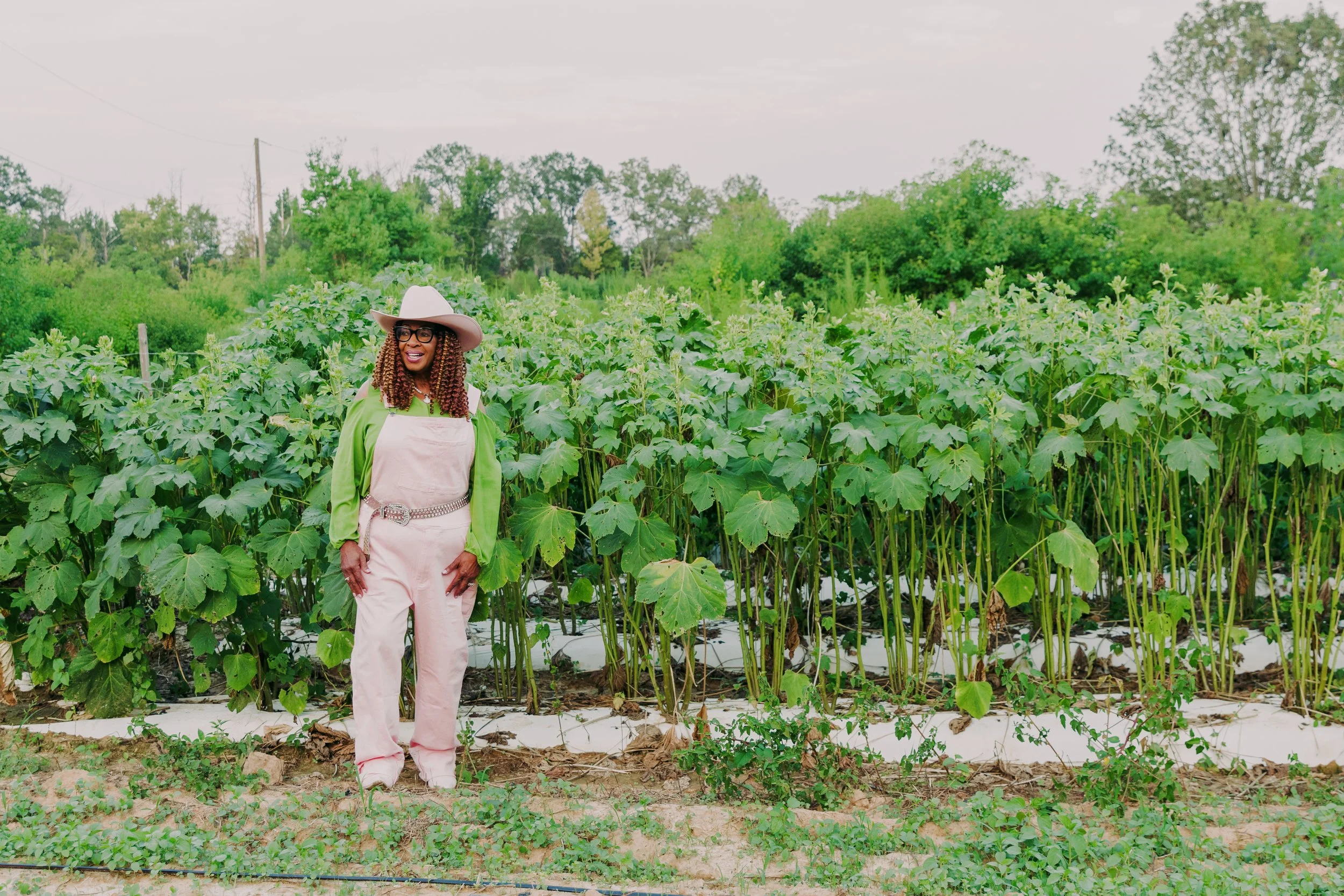
Photo Credit: Imani Khayyam
Across the city of Jackson, there are pockets of vacant lots and neglected properties. Many are often discussed in terms of what they take away from neighborhoods, including property values, safety, beauty and investment. Dr. Cindy Ayers Elliott, founder of Foot Print Farms, sees something else when she looks at available land.
She sees possibility.
For over 15 years, Ayers Elliott has been working to increase access to healthy, local and affordable food, building Footprint Farms from an experiment on a converted tennis court into an agricultural operation on 68 acres within Jackson’s city limits.
Even the farm’s name reflects that sense of purpose.
Ayers Elliott traces Footprint Farms to the well-known inspirational poem commonly called “Footprints” or “Footprints in the Sand.” In the poem, a person looks back over a life represented by footprints in the sand and wonders why, during the most difficult periods, there was only one set. The answer is that those were the moments when God carried the person.
Ayers Elliott remembers that message from childhood.
“I still feel strongly that I’m being carried,” she said.
The plural “Farms” was intentional, too. She believed there would eventually be more than one. Established in 2010, Foot Print Farms has expanded to have a presence today in 11 states through work involving farmers, nonprofits and urban agriculture.
Now, a memorandum of understanding between the city of Jackson, Foot Print Farms’ non-profit To Improve Mississippi Economics (T.I.M.E.), and Jackson’s Fresh Collective could help bring some of that vision directly into Jackson neighborhoods.
The agreement, approved unanimously by the Jackson City Council on June 23, 2026, creates an opportunity for Footprint Farms and the city to work together to expand food access, agricultural education and growing opportunities. Ayers Elliott said the partnership can include examining city-owned lots and dilapidated properties to determine where food could be grown and neighborhoods strengthened.
That makes the partnership particularly interesting for a city that continues to wrestle with blight.
Imagine an empty lot that requires maintenance but produces nothing, becoming rows of collard greens, tomatoes, squash and herbs. Imagine a neglected corner becoming a community garden where a senior citizen teaches a child how to plant something. Imagine land once defined by what was torn down becoming known for what is growing there.
This vision would not eliminate Jackson’s blight problem entirely, but it could provide a seriously helpful, nutritious and beautiful way to address portions of it.
The MOU may also provide another lesson worth considering. Formal agreements between government and community partners can establish how organizations work together toward a shared public purpose. Foot Print Farms’ agreement demonstrates what may be possible when an organization approaches the city not simply with a request, but with expertise, resources and an idea for addressing a community need. Other Jackson businesses, nonprofits and organizations might consider whether their own missions and capabilities could similarly complement the city’s work.
Serving as Program Architect for this MOU is Kahrna C. Stimley, Ed.S., Senior Services Division Manager for the City of Jackson’s Department of Human and Cultural Services. Ms. Stimley helped shape the Collective into a comprehensive platform capable of connecting municipal services with farmers, businesses, institutions, funders, community partners, and residents.

Photo Credit: Imani Khayyam
Ayers Elliott’s vision extends beyond simply planting vegetables. Under the partnership, Foot Print Farms plans to provide free workshops and training over the next two years, teaching residents how, when and where to grow food, including in soil and water. She also sees opportunities to work directly with homeowners associations, senior groups, fraternities, sororities and other community organizations.
“What can we make with what we already have?” Ayers Elliott said.
Foot Print Farms is already demonstrating what that ecosystem can look like.
The farm employs seven people locally and recently welcomed a Clinton High School senior interested in agriculture as a part-time employee. Ayers Elliott sees young people as essential to the future of work, combining the physical experience of farming with new ideas and technology.
The farm’s reach also extends from the field to the kitchen and potentially onto tables throughout Jackson.
Foot Print Farms operates a culinary kitchen and works with chefs, including Chef Kelly Washington Gibbs, who is originally from Compton, California, and relocated to the Jackson area. The farm already hosts farm-to-table experiences and works with organizations and restaurants. Its kitchen also provides a way to transform produce that might otherwise go to waste into soups, pickles and other preserved foods.
For Ayers Elliott, the central issue remains access.
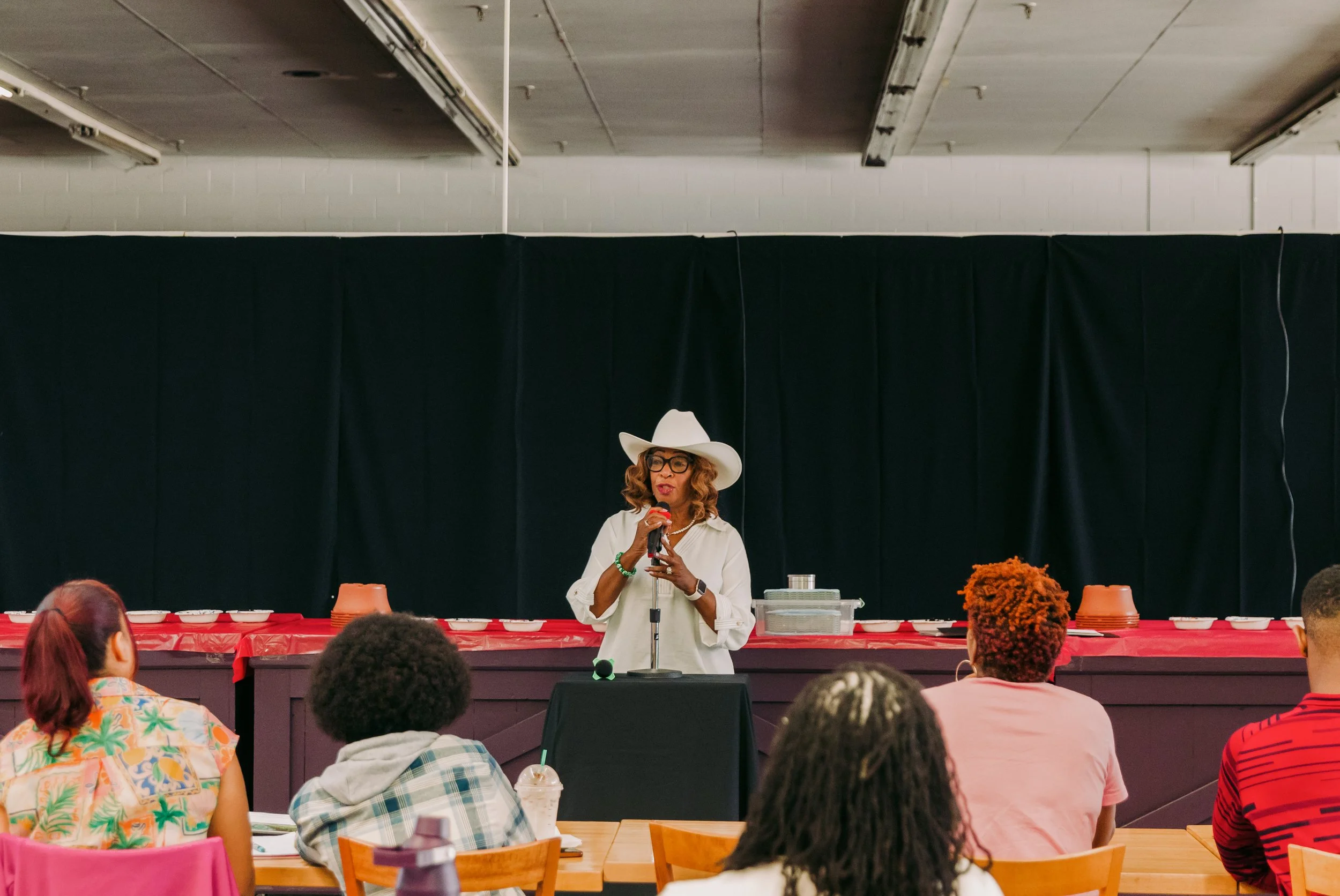
Photo Credit: Imani Khayyam
Footprint Farms is not focused on getting its name onto grocery store shelves. Its produce is intended to reach people through farmers markets and community food access points, creating a stronger local food system and bringing healthy food closer to the people who need it.
Her enthusiasm for farming is especially compelling because farming was not originally her world. Before becoming a farmer, Ayers Elliott worked in investment banking. She holds a doctorate in urban higher education and brings her understanding of finance, education, policy and regulation into agriculture.
“If you think agriculture’s not a part of your world, it’s not important, then tell me the last time you ate,” she said.

Jackson residents can visit Footprint Farms, learn about its work and discover ways to support local agriculture. But perhaps the greater invitation is to bring the idea home.
Look around your neighborhood. Is there a vacant lot that could become something more? Could your homeowners association start a garden? Could seniors teach younger neighbors what they know about growing food? Could a restaurant purchase more locally grown produce? Could a business, nonprofit or community organization bring its own resources to the table and explore a partnership with the city?
Blight tells a story about what has been abandoned.
A garden tells a story about what someone believes can still grow.
Through its new partnership with Foot Print Farms, Jackson has an opportunity to plant a healthier future, reminding us that with the faith of a mustard seed, even the smallest plot of land can hold the promise of something much bigger.
Interested in strengthening your neighborhood?
Interested in strengthening your neighborhood? Join the Jackson Association of Neighborhoods and become part of a citywide network of residents, neighborhood associations, businesses and community partners working together to build stronger communities. JAN members receive access to leadership training, resources and toolkits, funding opportunities, networking, collaborative programs and other programs.