

More Than Development: Why Alex Lawson Believes Jackson’s Best Days Are Ahead
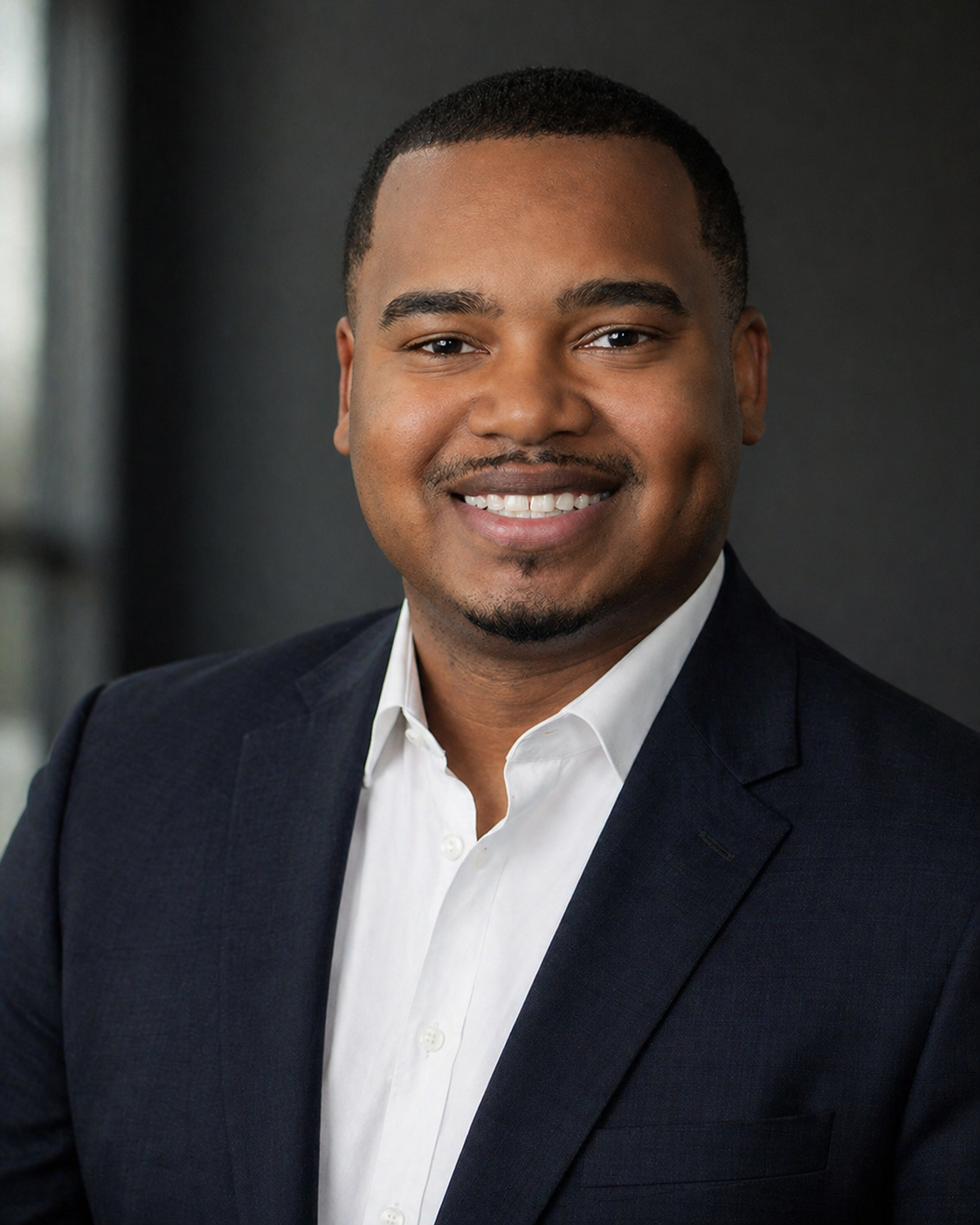
When Alex Lawson talks about Jackson, he does not sound like someone simply overseeing a government agency; he sounds like someone deeply invested in the city’s future. He speaks as someone who understands both its challenges and its potential, and who takes the responsibility of personally helping it move forward.
As the newly appointed executive director of the Jackson Redevelopment Authority (JRA), Lawson sees the city not as a collection of problems to fix, but as a place full of untapped potential waiting for the right systems, partnerships and investments to unlock it.
Lawson’s path to leading one of Jackson’s most important agencies began long before he entered public service.
A native Mississippian, Lawson spent part of his childhood in Ward 7 on Greenwood Avenue. He remembers walking to what once was Baker Elementary School and watching the stark differences in educational opportunities as his family moved between cities, including Atlanta, Houston and Mobile.
After graduating from Millsaps College with a finance degree and MBA, Lawson entered the corporate world as a financial analyst before eventually transitioning into education and community development work.
Lawson’s combination of work in operations at RePublic Schools, his work as a consultant and his work leading strategic initiatives for nonprofits has put him in a position to recognize how deeply neighborhood conditions impact students, families and futures. That realization eventually led him to HOPE Credit Union, where he spent nearly a decade working on economic mobility initiatives, community lending strategies and regional development efforts across the South.
During that time, Lawson began to identify pathways to help Jackson coordinate economic development efforts inspired by other Southern cities that were aggressively pursuing resources and partnerships.
“I started realizing no one was really talking to each other,” Lawson said. “Banks, nonprofits, government agencies, neighborhood groups, philanthropies — everyone was operating separately.”
That frustration evolved into conversations with Mayor John Horhn and local leaders about how to better align Jackson’s development ecosystem. When leadership transitioned at JRA, Lawson emerged as a natural fit for the role.
For many residents, JRA remains one of Jackson’s least understood agencies despite its significant influence on neighborhoods and redevelopment.
Created in 1968, the Jackson Redevelopment Authority was designed to help revitalize struggling areas, acquire and manage property, assemble land for development projects and help move major initiatives forward efficiently.
The agency can leverage financing tools, issue requests for proposals, oversee redevelopment agreements and coordinate projects intended to stimulate economic activity throughout the city. Lawson describes JRA as both a catalyst and connector.
“My goal is to build Jackson’s capacity to do big and small things well, and consistently,” Lawson said. “It shouldn’t be as hard as it sometimes is for us to get projects moving.”
That vision extends beyond downtown development headlines.
Lawson believes neighborhoods across South and West Jackson deserve to see meaningful investment, housing improvements and business growth alongside larger redevelopment efforts.
He also sees housing as one of the city’s biggest opportunities.
Using Farish Street Historic District as an example, Lawson pointed to growing demand for downtown living and the importance of building residential density alongside commercial redevelopment. He noted that Leonard Court, a new housing development near Farish Street, reportedly generated a waitlist of thousands of applicants.
“When you build it, they absolutely come,” Lawson said.
Still, Lawson acknowledges the challenges facing development in Jackson, including infrastructure issues, population decline, insurance concerns and difficulties attracting capital.
But those who know him describe his leadership style as unusually collaborative for government work.
Rather than operating behind closed doors, Lawson has pushed for deeper neighborhood participation in redevelopment conversations. By working with partners like JAN, Lawson has worked toward building a culture where community leaders now regularly attend meetings, review proposals and help shape redevelopment criteria to ensure that projects continue to move forward.
“What I’ve seen in other places is that redevelopment often happens to communities instead of with them,” Lawson said. “I wanted to flip that.”
JRA’s monthly public meetings are held at 10 a.m. on the fourth Wednesday of each month at Union Station downtown, with virtual participation options also available.
For Lawson, success 10 years from now would mean more than renovated buildings or ribbon cuttings.
He hopes Jackson reaches a point where private investment flows naturally, local entrepreneurs feel supported and neighborhoods once overlooked begin visibly thriving again.
In his mind, Jackson’s future looks like “greenery and flowers blooming and sprouting,” the result of years spent planting seeds, building systems and reconnecting people who all want the city to succeed.
Perhaps that is what makes Lawson’s leadership style feel different to many residents.
He talks like a businessman, he thinks like a strategist but, at his core, Alex Lawson still sounds like someone who remembers being a child in South Jackson and believing his city deserved more.
Now, he is in a position to help shape what comes next. He is actively and intentionally building bridges between neighborhoods, government, business and community in hopes that the next generation of Jackson children grows up seeing possibility, investment and opportunity reflected back to them every day.